|
|
Signals & Shifts
|
|
This month: new ASCM and DSCI research on AI transformation, notes from the CHAINge 2026 keynote panel, a new article on managing AI supply chains, and the Executive Leadership Forum under way in Tokyo.
|
| |
|
The Brief
From the Managing Director
The world of supply chains is changing faster than ever. New technologies, shifting trade dynamics, evolving customer expectations, and changing workforce models are converging to create a new paradigm for how supply chains operate and create value.
At DSCI, we are looking beyond these immediate changes and exploring what this paradigm should become over the next five years. A strong team of global experts, together with our Co-Chairs, is bringing research, operational experience, and diverse perspectives to this effort. What is emerging is exciting, bold, and pragmatic. We plan to publish our findings before year end.
Our 13th Executive Leadership Forum in Tokyo, October 14 to 16, will help advance this work. Under the theme, “Using Supply Chain Transformation to Navigate Global Uncertainties,” leaders will examine the intersection of geopolitics, digital trade readiness, emerging technologies, trusted and secure AI-ready supply chains, applied research, and customer value and trust.
We are also proud of our continued collaboration with ASCM. At CHAINge 2026 in Long Beach, DSCI’s Vivek Ghelani joined the keynote panel, “The Human Advantage,” to explore how AI is reshaping supply chain roles, leadership, organizational structures, and the way people interact with technology. Building a future that works for people and empowers them requires continual attention to how we prepare them for it.
Our digital trade work is also progressing. Through our agreement with the FIT Alliance and International Chamber of Commerce, we are contributing to new research on electronic bill of lading adoption. We will share the findings and their practical implications in the next edition.
This newsletter will continue to focus on valuable insights and practical learning. We welcome your perspectives, the challenges you are facing, and the areas where DSCI can engage and provide support.
We move on together…
Marko
|
|
| |
DSCI Highlights
|
| |
|
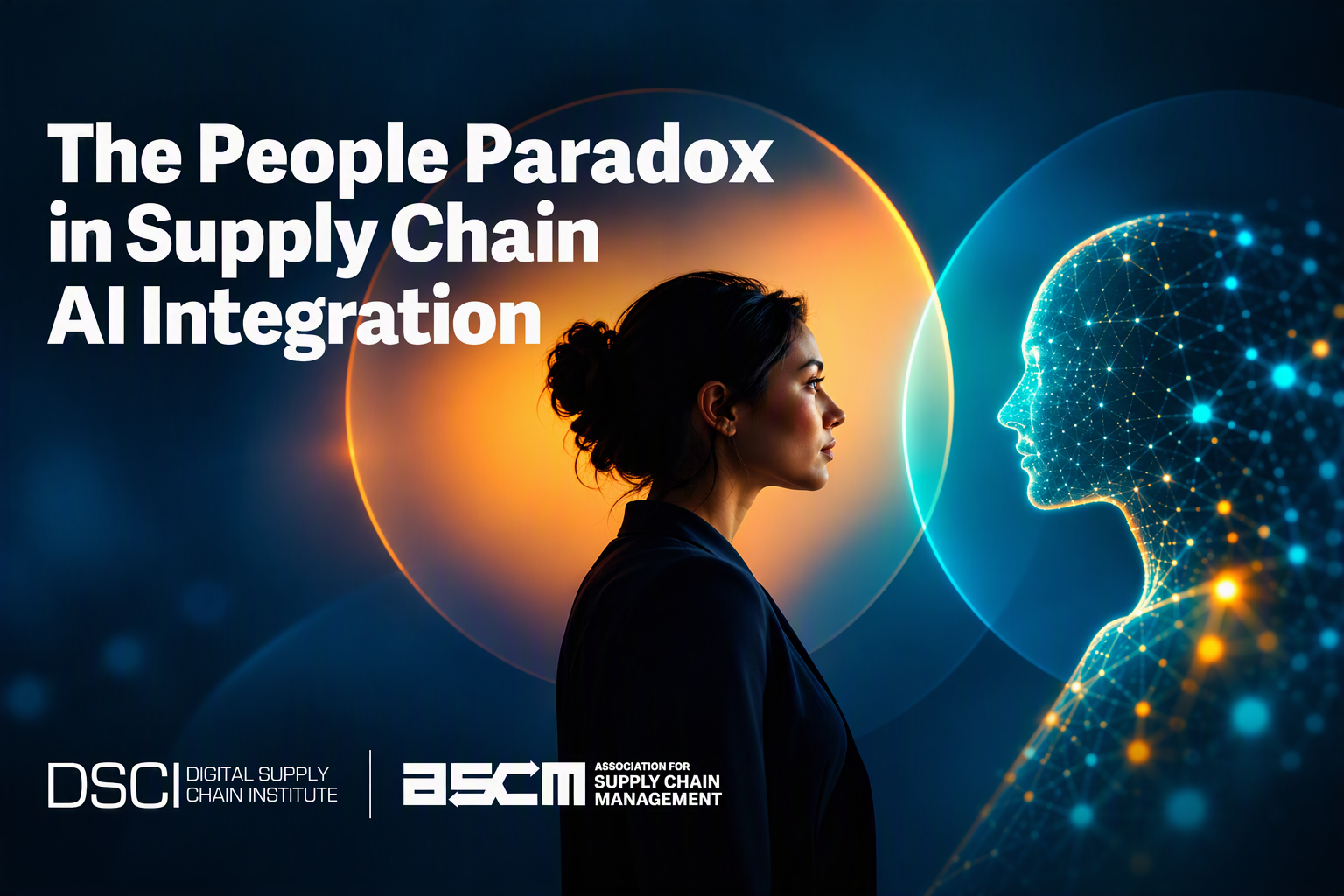
AI Transformation Is Becoming an Organizational Challenge
A new ASCM-DSCI study suggests that the biggest barrier to AI success may no longer be technology. While executive commitment to AI is strong, many organizations are struggling to translate ambition into operational execution. One of the most striking findings is the gap between C-suite engagement and middle-management leadership, with directors and managers often remaining observers rather than active participants in AI initiatives.
The research also shows that AI adoption progresses more slowly in cross-functional processes such as Sales & Operations Planning (S&OP), highlighting how organizational complexity can become a greater obstacle than technical capability. At the same time, organizations reporting higher levels of AI readiness achieve significantly greater project success, suggesting that capability is often built through implementation rather than waiting for perfect conditions. The takeaway: the next phase of AI transformation will require leaders to rethink organizational design, decision rights, workforce development, governance, and trust, not just technology deployment.
|
|
| |
|
|
| |
|
This Week in Tokyo
Executive Leadership Forum
|
| |
| October |
|
14 to 16
Tokyo, Japan
|
|
|
|
13th
Executive Leadership Forum
Invitation-only
|
|
|
| |
This week (October 14 to 16), DSCI is holding its 13th Executive Leadership Forum at the ANA InterContinental in Tokyo. The invitation-only event, hosted in cooperation with our member IHG, is bringing together C-level supply chain leaders under the theme “Using Supply Chain Transformation to Navigate Global Uncertainties.” In the next few weeks, keep an eye out for insights from the forum. For the agenda and list of speakers, click here. |
| |
|
|
| |
|
Conference Recap
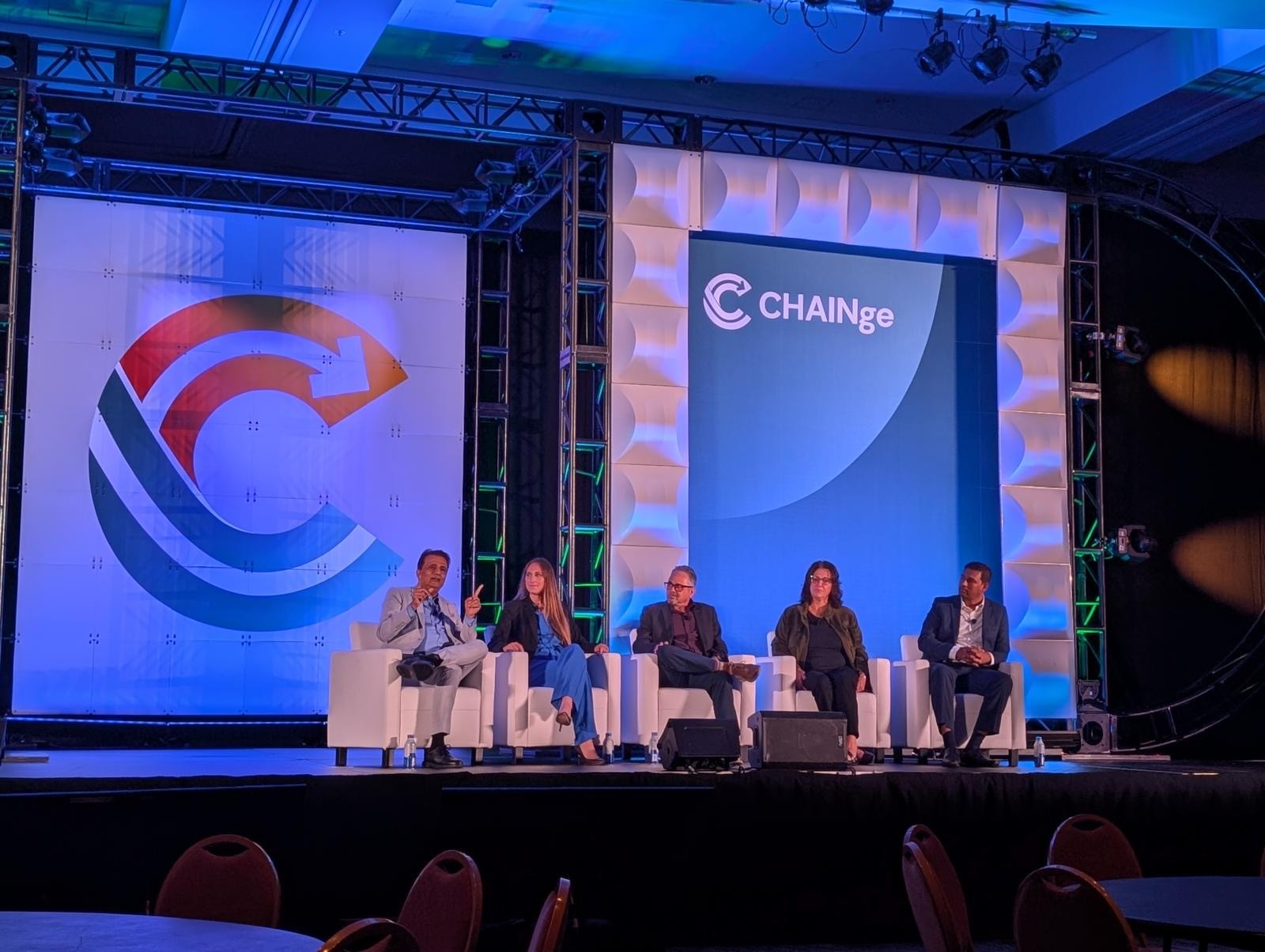
ASCM CHAINge 2026, Long Beach
We Will Still Need People: Notes from CHAINge 2026
DSCI took the main stage at ASCM CHAINge 2026 in Long Beach on September 29. Director of Research Vivek Ghelani joined the keynote panel, The Human Advantage, moderated by conference chair Nick Vyas of USC Marshall. Fellow panelists included Carita Hibben of C.H. Robinson and Mark Price and Jena Zangs of the University of St. Thomas.
The conversation began in an uncomfortable place: workforces are not ready for AI, and job displacement is a legitimate concern. It concluded on a more constructive note. People remain essential because they provide the expertise, judgment, and institutional knowledge that AI relies on to make sense of data.
|
| |
|
Three Takeaways for Members
|
|
Roles will shift toward ownership. Someone needs to be accountable for AI-generated outcomes. Subject matter experts, such as demand planners, will spend less time producing work and more time teaching AI agents what the business knows, while taking responsibility for the results. One technology manufacturer in our network has already created a role that is measured by the performance of its AI agents. |
|
|
Readiness is built through practice. In our research, organizations with AI-ready workforces reported a 71% project success rate, compared with 28% among the unprepared majority. They did not become ready before deploying AI. They became ready by deploying it. |
|
|
Freed time is a strategic resource. As AI takes on routine tasks, leaders can redirect employee time toward business model innovation and the long list of initiatives that never seem to get started because of existing priorities. |
|
|
| |
|
|
| |
|
New Article • By Dravida Seetharam and Jeff Caine
AI Success Is a Leadership Challenge, Not a Technology Challenge
In a new article, Managing AI Supply Chains: Same Technology, Different Outcomes, DSCI’s Dravida Seetharam and Jeff Caine argue that the difference between AI success and failure in supply chains has less to do with technology and more to do with organizational readiness. While AI is already helping companies improve forecasts, reduce inventory, lower logistics costs, and strengthen procurement performance, many organizations struggle to scale these gains because they lack the data quality, governance, talent, and accountability needed to turn pilots into business capabilities. Drawing on examples from Unilever, Walmart Mexico, and DHL, the authors show that the companies seeing the greatest returns are those that pair AI with clear business objectives, disciplined execution, and strong leadership. Their conclusion is clear: competitive advantage will belong not to the organizations adopting AI the fastest, but to those best prepared to operationalize it.
|
|
| |
|
Member News
Share Your Insights with the DSCI Community
One of the greatest strengths of the Digital Supply Chain Institute is the expertise, innovation, and thought leadership of our member community. If your organization has recently published an article, research paper, report, case study, or important company news, we invite you to share it with us. Through the Member News section of the DSCI website, we regularly showcase content that can help inform, inspire, and connect supply chain leaders across our network. Send submissions and links to [email protected]. We look forward to showcasing the expertise and achievements of our member community. |
|
| |
The Reading List
|
| |
|
IAPP
Italy has become the first EU country to approve a national law complementing the EU Artificial Intelligence Act.
|
|
Gartner
Autonomous planning will stay rare despite heavy spending, according to recent research by Gartner. The consultancy concludes that investment expands technical capability but does not create AI readiness: data foundations, decision governance and planner trust remain the constraints.
|
|
SupplyChainDive
The company will offer inbound planning and aged inventory agents as part of a larger push to help sellers grow internationally.
|
|
McKinsey & Company
The 2026 State of Digital Logistics Survey finds that logistics AI adoption is near universal, value capture is not. The differentiator is not adoption but three behaviors: making trade-offs visible in integrated dashboards, moving analytics into operational workflows, and connecting decisions to execution through agentic capabilities.
|
|
DHL
The report finds that advances in AI, robotics, and automation are transforming not only logistics operations, but also the workforce itself.
|
|
Mining Weekly
Supply chain leaders are redesigning their networks around greater choice and flexibility, as resilience increasingly becomes a source of competitive advantage and growth, according to new research from DP World’s Global Trade Observatory.
|
|
EY
A new EY survey of more than 850 supply chain executives in consumer products finds that while 94% believe supply chains are undergoing significant transformation, only 9% have fully embedded those changes into day-to-day operations, and just 27% are highly confident managing the resulting complexity.
|
|
SupplyChainDive
High temperatures are delaying supplier deliveries and hobbling productivity in the process, according to the Global Electronics Association.
|
| |
|
Signals & Shifts
Get the DSCI newsletter in your inbox every month
|
|
Regards,
Digital Supply Chain Institute
|
|
© 2026 Digital Supply Chain Institute, a Center for Global Enterprise initiative. All rights reserved.
|
|